Exercise. Plain and simple. Many people have started off the new year with the resolution to exercise more or to become more fit - which is fantastic! I hope each and every one of you are able to attain this goal by the time we hit December 31st, 2026 at 11:59 pm. Not only do I wish for you to achieve these goals, but also to make sure you are exercising every single part of your body - and don’t forget your brain.
Your brain is the mastermind behind it all (pun intended). It helps you move, think, breathe, you name it the brain does it. So why do we neglect it when it comes to exercise?
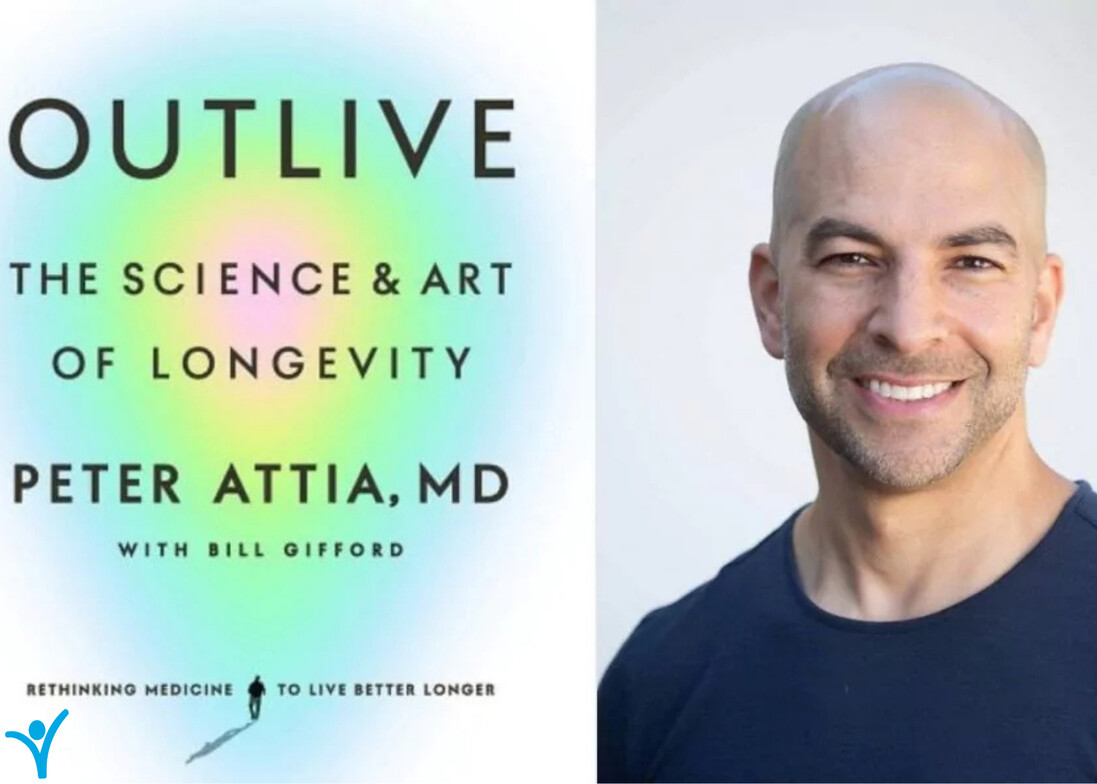
If you are a patient of Dr. Calla Kleene, she has probably told you about a book called “Outlive” by Peter Attia, MD. Maybe you have seen a copy of the book floating around our office too, but this is where the inspiration for this post comes from. In Chapter 9, Peter talks about chasing memories and how lack of exercise is SO closely linked with cognitive decline. Some of the diseases Peter focuses on in this chapter are Parkinson's disease, Dementia, and Alzheimer's. This chapter is also very heavy on genetic make-up and how if you are a carrier or a certain gene combination, you are at a higher risk of developing said disease more so than other people, and how researches had been studying for years gene expression and if there is a direct link between cognitive decline and specific gene mutations. Spoiler, they haven’t found one yet - but don't give up hope.
Below, we will break down a few different quotes from Peter that hone in on how exercise and even diet affect certain disease progression, even if they are a carrier of the “higher risk gene”.
“Exercise is the only intervention shown to delay the progression of Parkinson’s” - Page 193, Chapter 9 - Outlive by Peter Attia, MD.
Read that again, and again, and again until you can see it with your eyes closed. People who have been more active in their lives compared to those who have been more sedentary tend to resist or slow the progression of this disease. If you want to keep your brain young and have full “movement reserves”, exercise is your best friend. Think of incorporating exercises that challenge you a bit more than your usual - instead of running for 15 minutes, do a hip-hop dance routine for 15 minutes 1-2x/week to activate different parts of your brain that deal with coordination and balance. Along with your cardio routine, add in elements of memory games or matching games to engage your brain in a time when you normally would wonder to focus on anything else besides doing cardio (math problems you solve in your head, thinking about where different objects are in your house, active recall of something you read or listened to yesterday, etc.).
“The greater someone’s grip strength, the lower their risk of dementia” - Page 201, Chapter 9 - Outlive by Peter Attia, MD.
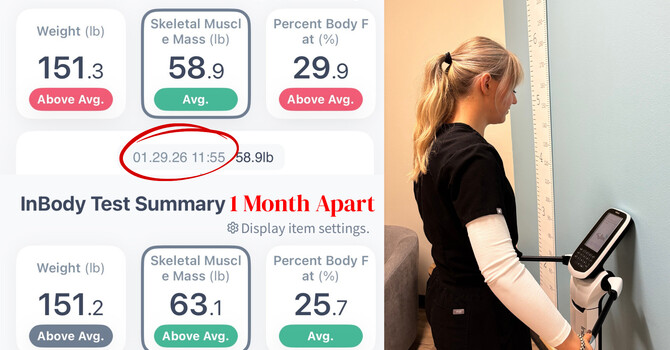
If you have had your vitals taken before your visit recently and the gals have gotten a grip strength from you - in part it’s because we learned that the higher your grip strength, the better your overall health. Granted, it's not just dementia that is at a lower risk for somebody with a stronger grip. If you have a stronger grip, you are more likely to be able to live independently longer due to being able to do daily tasks for yourself still, and have less joint strain/pain because you are more active on a daily basis.
To help increase your grip strength, you can purchase a grip strength trainer off Amazon and have it at your desk while your working and have idle time, doing “farmers carries” at the gym and increasing the weight by 1-2 pounds each time (as you can tolerate) will help strengthen your grip, and performing dead hangs from a pull-up bar will increase your grip strength (and it’s a nice full body stretch after a workout).
“The single most powerful item in our preventative tool kit is exercise, which has a two-pronged impact on Alzheimer's disease risk: it helps maintain glucose homeostasis and it improves the health of our vasculature” Page 201, Chapter 9 - Outlive by Peter Attia, MD.
There’s the word of the day again; exercise. Exercise helps to keep glucose levels in check (glucose being a fuel source for your brain) but also makes sure that your blood is moving smoothly through your body and keeping your heart pumping strong. If you are interested in diversifying your brain's fuel source; consider starting a ketogenic diet with intermittent fasting. Your brain will not only use glucose as a fuel source, but will also use ketones once the glucose “runs out”. Plus intermittent fasting to help keep glucose in balance. Another way to help with maintaining/improving the health of the vascular system is to do moderate to intense physical activity 3-5x/week for 150 min. Total for the week (~30 minutes/day). Throw in strength and endurance training 2-3x/week for 30 minutes/day to keep your grip strong and improve your mitochondrial efficiency.
This is a lifelong resolution I want you to consider; Create a checklist for the start of each decade. What do you still want to be able to do, independently, when you are seventy years old? Eighty years old? So on and so forth. Your list doesn't have to be extravagant and complex - when you are eighty years old, you should still be able to tie your shoes on your own, or carry in 2 bags of groceries (one in each hand) from the car to the kitchen, brush your hair on your own, etc.
Every day life tasks get taken for granted until we lose the ability to perform them independently.
I highly recommend putting this book on your reading list for this year. There is so much more that can be discussed but I will refrain from info dumping. We have a few copies at the office for you to borrow - if you happen to get my copy I will apologize in advance for all the annotations - or checking out your local library or used bookstores is bound to have a copy.
Have a happy and healthy 2026!